
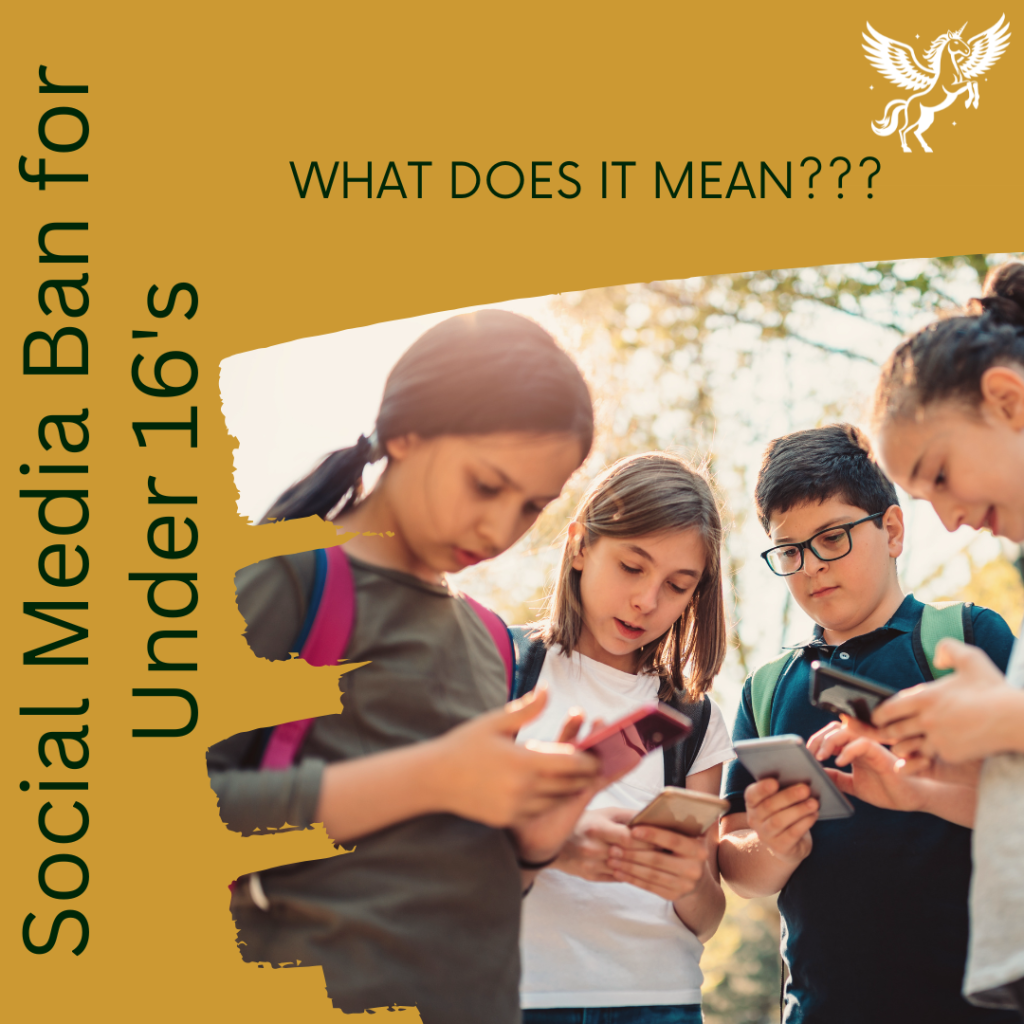
The government’s announcement that it intends to ban under 16s from accessing many of the UK’s major social media platforms has sparked significant debate across the country. Supporters argue that it is a necessary step to protect young people from the risks associated with social media, while critics question how it will be enforced and whether it addresses the wider challenges facing young people online.
As someone who works in marketing every day, people often assume I would automatically oppose any restrictions on social media. After all, much of modern marketing relies on digital platforms to connect businesses with their audiences. The reality is far more nuanced than that.
At Escape the Village, we spend a great deal of our time helping businesses, charities and community organisations make the most of their online presence. We see first-hand how social media can help a small business find customers, how it can help a charity raise funds, and how it can help local groups build stronger communities. At the same time, we also see the pressures that come with living in an increasingly digital world. Like many parents, business owners and volunteers, I’ve watched social media become woven into almost every aspect of daily life. For today’s young people, it is often not simply a communication tool but a major part of their social world.
That is why this conversation is about far more than marketing. It is about childhood, wellbeing, communication, community and the role technology should play in our lives.
Social Media Is Neither the Hero Nor the Villain
One of the problems with discussions around social media is that they often become polarised. Some people portray it as one of the greatest inventions of modern times, while others see it as the root cause of many of society’s problems. The truth, as is often the case, lies somewhere in the middle.
Social media has created opportunities that simply didn’t exist twenty years ago. Small businesses can now compete with larger organisations on a relatively level playing field. Charities can reach supporters across the country. Rural businesses can connect with customers far beyond their local village boundaries.
It has also given many young people opportunities that previous generations could only dream of. They can learn new skills, connect with people who share their interests, find support networks and showcase their talents to the world. Some even start their own mini businesses that later go on to become full businesses.
Izzy, our daughter and part of the Escape the Village team, is a perfect example of this. Living with chronic health conditions has meant that the traditional routes into education and employment have not always been straightforward. Social media helped her build a photography business, connect with the motorsport community and create opportunities that may otherwise never have existed. She is now approaching 19 but we regularly see young people with car washing or gardening mini businesses on Facebook.
Yet none of this changes the fact that there are genuine concerns.
Many parents have watched their children struggle with online pressures that previous generations never experienced. Constant comparison, unrealistic expectations, cyberbullying, harmful content and the pressure to always be connected have become common concerns in households across the country.
The challenge has never been whether social media is entirely good or entirely bad.
The challenge is how we maximise the benefits while reducing the risks.
Why Many Families Are Supporting the Ban
For many parents, the announcement has been met with relief. Over the last decade there has been growing concern about the impact of social media on children’s mental health and wellbeing. Families have found themselves navigating issues that simply did not exist when they were growing up.
Many parents describe a constant battle to encourage children to put their phones down, spend time outdoors, engage in hobbies or simply switch off for a while. Others worry about the content their children are exposed to, often through algorithms that can rapidly push increasingly extreme or inappropriate material into a young person’s feed.
There is also growing concern about the way social media can influence self-esteem. Young people are exposed to carefully curated versions of other people’s lives, often leading to unrealistic expectations about appearance, success, relationships and lifestyles.
Whether the proposed ban ultimately solves these issues remains to be seen. Young people are incredibly resourceful and technology evolves quickly. However, it is understandable why many parents see the move as a positive step towards creating healthier boundaries around social media use.
What Does This Mean for Small Businesses?
For many small business owners, the immediate reaction may be to wonder whether this will affect their marketing. In reality, the impact is likely to be relatively limited for most businesses. The majority of local businesses are already targeting adults rather than teenagers. Whether you run a garden centre, an accountancy practice, a café, a trades business or a consultancy, your customers are usually the people making purchasing decisions rather than their children.
However, the announcement does highlight something we have been telling clients for years. Social media should never be the foundation of your marketing strategy. It should be one tool within a wider marketing toolkit. Too many businesses have become overly dependent on social platforms. They invest years building followers without considering what would happen if the platform changes its rules, alters its algorithm or loses popularity.
The businesses that weather these changes best are those that have invested in assets they actually own.
Why Owning Your Audience Matters
One of the biggest lessons from this announcement is the importance of ownership.
- Your Facebook page belongs to Facebook.
- Your Instagram account belongs to Instagram.
- Your TikTok audience ultimately sits on a platform controlled by somebody else.
At any moment, those platforms can change how they operate.
- Your website, however, belongs to you.
- Your email database belongs to you.
- Your blog content belongs to you.
- Your customer relationships belong to you.
This is one of the reasons we are such strong advocates of websites, blogs, email marketing and SEO. These are long-term assets that continue working for your business regardless of what happens on social media. When businesses focus solely on social media, they are effectively building their marketing strategy on rented land.
The Impact on Community Organisations
While much of the discussion has focused on businesses and families, there is another group that could be significantly affected by these changes.
Community organisations.
Across the UK, thousands of organisations rely heavily on social media to communicate with members and supporters. Football clubs, rugby clubs, dance schools, cadet organisations, youth groups, charities and community projects often use private Facebook groups as their primary communication channel. In many cases, these groups contain both parents and young people.
They are used to share training schedules, event updates, photographs, achievements, reminders and important notices. For volunteers already stretched for time, social media has often provided a simple and effective solution. If under-16s can no longer access these platforms, many organisations will need to rethink how they communicate.
A Challenge for Youth Groups and Cadet Organisations
This is particularly relevant for organisations working directly with young people. As someone involved with the Army Cadet Force, I can see both sides of the argument. Safeguarding young people online is clearly important. However, many organisations already use social media responsibly and effectively.
For cadet detachments, sports clubs and youth organisations, social media often provides a quick and convenient way to keep members informed and engaged. Achievements can be celebrated, opportunities promoted and last-minute updates shared instantly.
The challenge moving forward will be finding alternative ways to maintain those connections without relying on platforms that younger members may no longer be able to access. This is not an impossible challenge, but it is one that many organisations will need to start planning for sooner rather than later.
The Opportunity Hidden Within the Challenge
While change can be uncomfortable, it often creates opportunities. This announcement may encourage businesses and organisations to strengthen their communication strategies and reduce their reliance on a single platform. We may see greater use of websites, member portals, dedicated apps, email newsletters and communication systems specifically designed for clubs and organisations. In many ways, this could result in stronger and more resilient communication structures.
When all communication is dependent on a single platform, organisations are vulnerable. When communication is spread across multiple channels, they are far better equipped to adapt to change.
Looking Beyond the Headlines
It would be easy to view this announcement purely as a debate about social media. In reality, it is about something much bigger. It is about how we balance technology with wellbeing. It is about how we protect young people while still allowing them to benefit from the opportunities technology provides. It is about how businesses communicate with customers and how organisations communicate with members. Most importantly, it is about recognising that technology should support our lives rather than control them.
Our View on The Upcoming Under 16’s Ban
At Escape the Village, we believe social media remains a valuable and powerful tool. We use it every day, and we help our clients use it effectively. However, we have never believed it should be the only tool. Whether you are running a small business, a charity, a football club, a cadet detachment or a community organisation, the principle remains the same.
- Build communication channels that you own.
- Invest in relationships rather than followers.
- Focus on genuine engagement rather than vanity metrics.
- And never put all your eggs in one digital basket.
The digital world will continue to evolve, with or without this ban. The organisations that thrive will be those that adapt, diversify and remember that behind every profile, every notification and every follower is a real person. That is something no algorithm will ever replace.
